
What is deep house? Definition, BPM & origins
Deep house is the soulful, chord-driven branch of house music — built on lush, jazz- and gospel-tinged harmony over a relaxed four-on-the-floor groove, typically 110–125 BPM. It grew out of Chicago's house scene in the mid-1980s, and the genre's blueprint record is Larry Heard's "Can You Feel It," released in 1986 under his Mr. Fingers alias.
| Deep house | |
|---|---|
| Origin | Chicago, USA — mid-1980s |
| Typical BPM | ~110–125 (a lot of current deep house sits around 120–124) |
| Key track | Larry Heard (as Mr. Fingers), "Can You Feel It" (1986) |
| Also foundational | Larry Heard (Fingers Inc.), "Mystery of Love" (1985) |
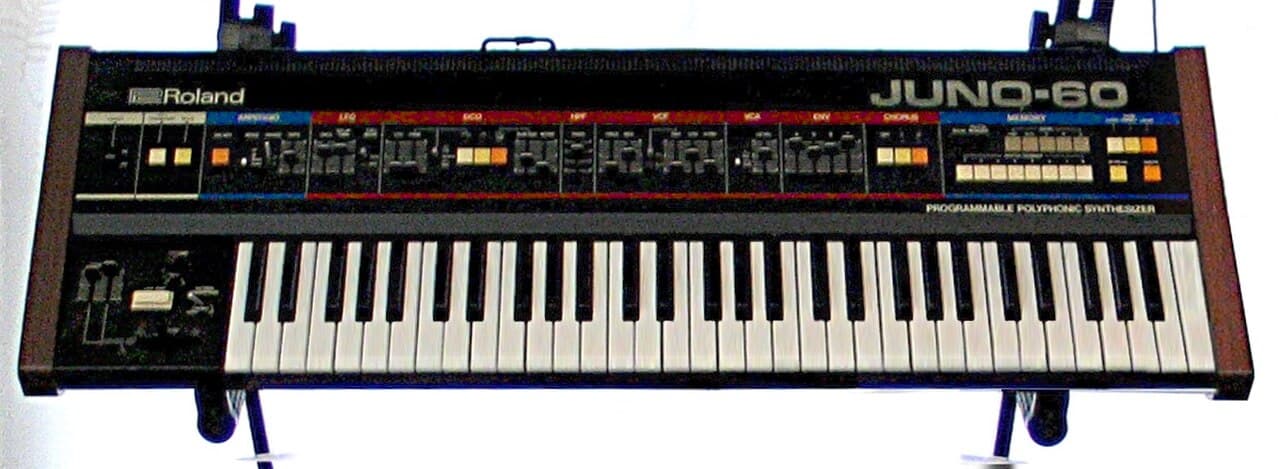
| Core gear | Roland TR-909 (drums), Juno-60 (chords and pads) |
| Where to hear it | Late-night and sunrise club sets, listening bars — rarely festival main stages |
In more detail
House music was barely a couple of years old when Chicago producer Larry Heard started softening its raw, disco-descended sound with richer harmony. Recording as Mr. Fingers, Heard released "Mystery of Love" in 1985 on his own Alleviated Records — an early signal of where the sound was heading — before following it with "Can You Feel It" in 1986, the track the genre now treats as its founding document. Built around slow, jazz-tinged chords from a Roland Juno-60 over a spacious TR-909 groove, "Can You Feel It" breathes rather than pounds; that combination of soulful, almost gospel-like harmony over a steady four-on-the-floor pulse is what "deep" describes.
Deep house draws directly on 1980s jazz-funk and soul, and it keeps house music's electronic backbone — drum machines, synth pads, sung or spoken vocals — while dialling the mood down from disco-era euphoria to something more nocturnal and reflective. Basslines are rounder and quieter than in punchier house styles; percussion is spacious rather than busy; chords, not hooks, carry the track.
One caution worth knowing: in the 2010s, "deep house" became a loose marketing label for a wave of chart-friendly, vocal-led dance-pop that has little to do with the Chicago sound described here. Purists distinguish that commercial usage from the soulful, underground original — if a track sounds like a pop song with a house beat underneath it, it almost certainly isn't the deep house this page is defining.
Deep house is most often confused with two other sounds. Tech house keeps house's tempo but strips out the chords for a leaner, more percussive club tool built for peak-time floors. Organic house trades deep house's electronic chords for acoustic and world instruments — kalimba, oud, hand percussion. Both comparisons are detailed in Related reading below; this page stays focused on defining deep house on its own terms.
How to recognise it in 10 seconds
- Listen for the chords. Rich, jazzy or gospel-tinged chords and pads are the single biggest tell.
- Feel the tempo. A relaxed, unhurried 110–125 BPM — never rushed, never aggressive.
- Check the bassline. Round and muted rather than sharp, rolling or distorted.
- Read the room. Deep house soundtracks late-night and sunrise sets far more often than festival peak time.
Related reading
- Deep house vs tech house — the detailed side-by-side, including BPM and gear differences.
- Organic house vs deep house — how deep house's electronic chords differ from organic house's acoustic instruments.
- See the full guide to house music subgenres for every comparison and deep-dive in one place.
FAQ
What BPM is deep house? Roughly 110–125 BPM, with a lot of current deep house sitting around 120–124 BPM — slower and more relaxed than tech house or techno.
Who invented deep house? Larry Heard, recording as Mr. Fingers, is the genre's reference point: his own "Mystery of Love" (1985) and "Can You Feel It" (1986) are both treated as founding records.
What's the difference between deep house and tech house? Deep house leans on rich chords and a soulful mood; tech house strips that back for a leaner, more percussive club sound at a slightly faster tempo. See deep house vs tech house for the full comparison.
What's the difference between deep house and organic house? Deep house is fully electronic — drum machines and synth chords. Organic house layers in acoustic and world instruments like kalimba, oud and djembe. See organic house vs deep house.
Is the "deep house" you hear on the radio today the same genre? Not always — the label was stretched in the 2010s to cover chart-friendly dance-pop with little connection to the soulful 1980s Chicago sound described on this page.
Genre, tempo and origin facts verified as of July 2026 against Wikipedia's "Deep house" and "Mystery of Love (Larry Heard song)" entries and MasterClass's deep house guide.
FAQ
- What BPM is deep house?
- Roughly 110–125 BPM, with a lot of current deep house sitting around 120–124 BPM — slower and more relaxed than tech house or techno.
- Who invented deep house?
- Larry Heard, recording as Mr. Fingers, is the genre's reference point: his own "Mystery of Love" (1985) and "Can You Feel It" (1986) are both treated as founding records.
- What's the difference between deep house and tech house?
- Deep house leans on rich chords and a soulful mood; tech house strips that back for a leaner, more percussive club sound at a slightly faster tempo. See deep house vs tech house for the full comparison.
- What's the difference between deep house and organic house?
- Deep house is fully electronic — drum machines and synth chords. Organic house layers in acoustic and world instruments like kalimba, oud and djembe. See organic house vs deep house.
- Is the "deep house" you hear on the radio today the same genre?
- Not always — the label was stretched in the 2010s to cover chart-friendly dance-pop with little connection to the soulful 1980s Chicago sound described on this page.