
What is the Balearic sound? Ibiza's eclectic DJ style, explained
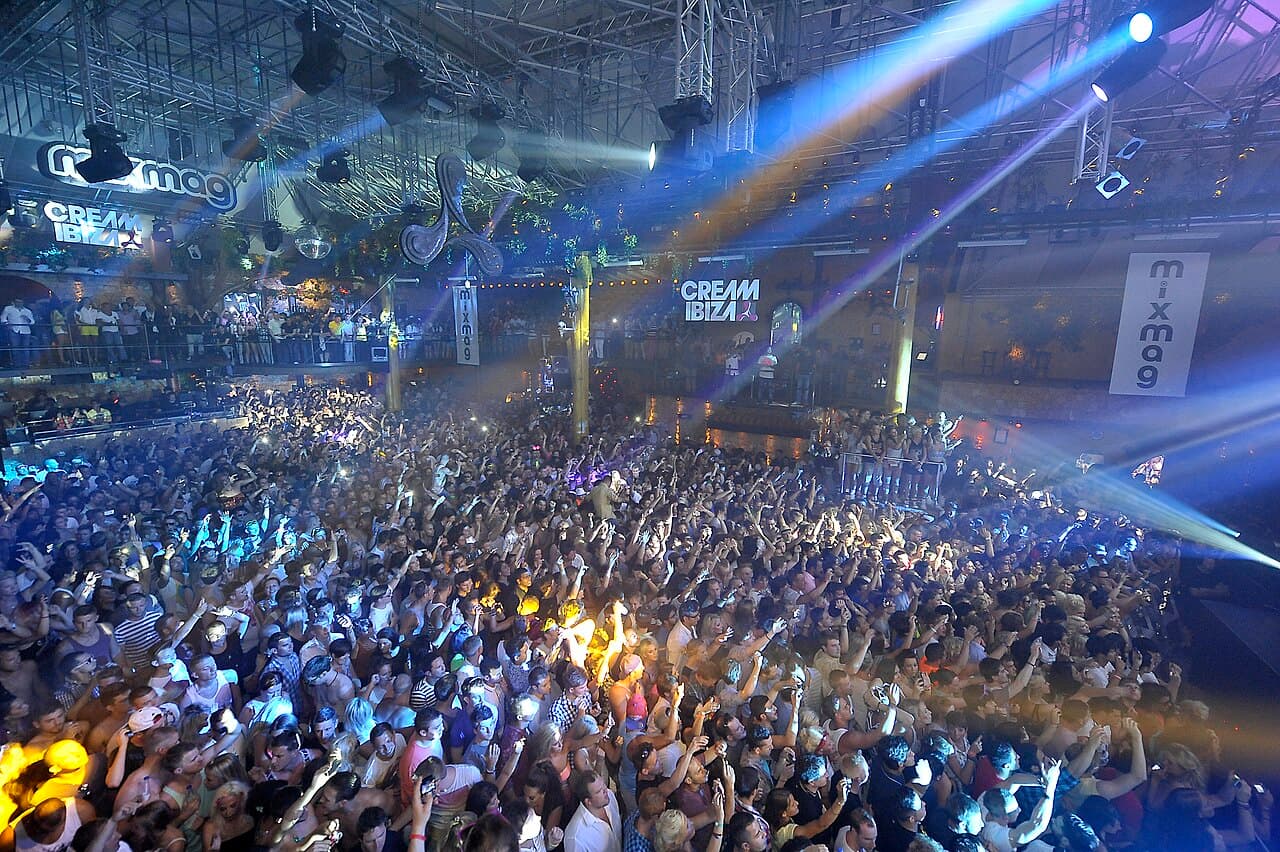
The Balearic sound -- also called Balearic beat -- isn't a music genre with a fixed tempo or sound. It's the eclectic, "anything goes" DJ style born at Ibiza's Amnesia nightclub in the mid-1980s, where Argentine DJ Alfredo mixed early house records in with pop, rock, Latin and disco. Cafe del Mar later split off its mellower "chillout" branch, and when four London DJs experienced Alfredo's sets in September 1987, they went home and opened the clubs that ignited Britain's 1988 acid house explosion.
| The Balearic sound | |
|---|---|
| Origin | Amnesia nightclub, Ibiza -- mid-1980s |
| Key figure | DJ Alfredo (Alfredo Fiorito), Amnesia's resident DJ from around 1983-84 |
| Defining trait | Genre-blending eclecticism -- house mixed with pop, rock, Latin and disco -- not a fixed BPM or sound |
| Chillout branch | Cafe del Mar (open since 1980); Jose Padilla's sunset sets from 1990-91 |
| UK connection | September 1987 Ibiza trip -> Shoom (Nov/Dec 1987) -> Spectrum & The Trip (1988) -> the "Second Summer of Love" |
DJ Alfredo and the Amnesia sound
Alfredo Fiorito emigrated from Argentina and settled on Ibiza in September 1976. He began DJing at a small bar called Be Bop in 1982, and by around 1983-84 had talked his way into a residency at Amnesia, then a large open-air club outside Ibiza Town. What made his sets distinctive wasn't any single style of music -- it was the range. In the same set, Alfredo would move from the house records just starting to arrive from Chicago into Tears for Fears, Pink Floyd, Bob Marley, Paco de Lucia and Italian pop, dissolving the usual lines between "dance music" and everything else. That eclecticism -- rather than any specific tempo or drum pattern -- is what "Balearic" describes, and it earned Alfredo the nickname "the Father of the Balearic beat."
Cafe del Mar and the chillout branch
Not every Balearic DJ was playing to a packed dancefloor. Cafe del Mar, a bar overlooking the sunset on Ibiza's west coast, had been open since June 1980, and by the end of the decade DJs there were already easing the day into night with a slower, more atmospheric companion to Amnesia's dancefloor sets. From 1990, Jose Padilla took over as resident DJ, and by 1991 his sunset sessions -- layering ambient, downtempo and stray classical or jazz fragments over the horizon -- had a name of their own: "chillout." Padilla had no blueprint for it; the term didn't exist yet when he started. The sound went fully global once React Music began pressing the Cafe del Mar compilation series in 1994, spinning Balearic's mellow half into an entire genre of its own.
The night that brought it to Britain (September 1987)
In September 1987, four London DJs and club promoters -- Paul Oakenfold, Danny Rampling, Nicky Holloway and Johnny Walker, along with Trevor Fung and Ian St Paul -- spent a week on Ibiza to mark Oakenfold's 24th birthday. Amnesia is where the trip turned into a turning point: night after night, on ecstasy, they watched Alfredo swing from house into Queen, Kate Bush and George Michael without the crowd blinking. As Holloway later put it, "on E, it all made sense."
Back in London, each of them tried to rebuild what they'd felt. Rampling got there first: Shoom opened at a Fitness Centre basement in Southwark in November 1987, with its regular Saturday night beginning that December 5th -- small, sweaty, and deliberately modelled on Amnesia's unguarded atmosphere. Oakenfold followed in April 1988 with Spectrum, a Monday night at Heaven near Trafalgar Square (later renamed Land of Oz after tabloid attention), and Holloway opened The Trip at the Astoria that June, with Pete Tong behind the decks. Between them, these Balearic-inspired nights fed directly into what became known as Britain's 1988 "Second Summer of Love" -- the acid house explosion that turned a niche Ibiza DJ style into a mass youth movement.
Balearic sound vs house music: the difference
It's easy to blur "Balearic" and "house" together, since Alfredo's Amnesia sets always included house records and Balearic energy powered acid house's UK breakthrough. But they aren't the same thing. House music is a specific genre that developed in Chicago clubs like the Warehouse in the early-to-mid 1980s, built around a steady 4/4 kick from a drum machine and disco-style edits. The Balearic sound is a DJ selection style, not a genre -- there's no fixed tempo, instrumentation or production template that makes a track "Balearic." A record only becomes Balearic through how and where it's played: house, pop, rock, Latin or reggae, mixed together on the same night at Amnesia or Cafe del Mar. That's also why this isn't the same as a guide to clubbing in Ibiza today -- for which clubs and nights to go to now, see our Ibiza house clubs guide.
How to recognise it in 10 seconds
- Listen for the mix, not the sound. A set that moves from a house record into a pop or rock track in the same hour is a strong Balearic signal -- no single genre defines it.
- Check the mood. Warm, sun-drenched and unhurried, whether it's Amnesia's dancefloor energy or Cafe del Mar's slower sunset pace.
- Look for the source. If it traces back to Amnesia's DJ Alfredo or Cafe del Mar's Jose Padilla, it's Balearic by lineage, not just by vibe.
- Don't confuse it with a genre chart. Unlike house or techno, there's no "Balearic" BPM or drum pattern to point to -- it's an ethos, not a production style.
Related reading
- The history of house music -- the Chicago genre the Balearic sound sits alongside, not inside.
- What is acid house? -- the sound the Balearic-inspired London clubs of 1987-88 turned into a genre of its own.
- Ibiza house clubs, by night -- for which clubs and nights to actually go to today.
FAQ
What is the Balearic sound? An eclectic DJ selection style born at Ibiza's Amnesia club in the mid-1980s, mixing house with pop, rock, Latin and disco in the same set -- not a fixed music genre.
Who is DJ Alfredo? Alfredo Fiorito, an Argentine DJ who settled on Ibiza in 1976 and became Amnesia's resident DJ by around 1983-84. His genre-blending sets earned him the nickname "the Father of the Balearic beat."
Is the Balearic sound the same as house music? No. House is a specific Chicago-born genre with a steady 4/4 rhythm; the Balearic sound is an "anything goes" mixing style that includes house alongside pop, rock and other genres.
What is Cafe del Mar's role in the Balearic sound? It's the chillout branch: open since 1980, its sunset sets became a slower, ambient counterpart to Amnesia's dancefloor, especially once Jose Padilla took over as resident DJ from 1990.
How did the Balearic sound reach the UK? Four London DJs -- Oakenfold, Rampling, Holloway and Walker -- experienced Alfredo's Amnesia sets in September 1987, then went home and opened clubs (Shoom, Spectrum, The Trip) that fed directly into 1988's acid house explosion.
Is this a guide to Ibiza clubbing today? No -- this page explains the sound's origin and history. For which clubs and nights to actually go to now, see our Ibiza house clubs guide.
Verified as of July 2026 against Wikipedia's "Alfredo Fiorito," "Balearic beat," "Cafe del Mar," "Shoom" and "Paul Oakenfold" entries, amnesia.es's own DJ Alfredo profile, MN2S's "We're Going to Ibiza: The First Trip," and Rolling Stone's oral history of Shoom.
FAQ
- What is the Balearic sound?
- An eclectic DJ selection style born at Ibiza's Amnesia club in the mid-1980s, mixing house with pop, rock, Latin and disco in the same set -- not a fixed music genre.
- Who is DJ Alfredo?
- Alfredo Fiorito, an Argentine DJ who settled on Ibiza in 1976 and became Amnesia's resident DJ by around 1983-84. His genre-blending sets earned him the nickname 'the Father of the Balearic beat.'
- Is the Balearic sound the same as house music?
- No. House is a specific Chicago-born genre with a steady 4/4 rhythm; the Balearic sound is an 'anything goes' mixing style that includes house alongside pop, rock and other genres.
- What is Cafe del Mar's role in the Balearic sound?
- It's the chillout branch: open since 1980, its sunset sets became a slower, ambient counterpart to Amnesia's dancefloor, especially once Jose Padilla took over as resident DJ from 1990.
- How did the Balearic sound reach the UK?
- Four London DJs -- Oakenfold, Rampling, Holloway and Walker -- experienced Alfredo's Amnesia sets in September 1987, then went home and opened clubs (Shoom, Spectrum, The Trip) that fed directly into 1988's acid house explosion.
- Is this a guide to Ibiza clubbing today?
- No -- this page explains the sound's origin and history. For which clubs and nights to actually go to now, see the Ibiza house clubs guide.